Why a Gilbert Sprinkler Head Bubbles at the Base
A Gilbert sprinkler head that bubbles at the base usually means water is escaping before it reaches the spray pattern. The head may still pop up, but water boils around the body, soaks the turf edge, or runs into nearby gravel while the rest of the zone looks weak.
This is different from a simple spray adjustment. A bubbling head often points below the nozzle: cracked riser, damaged seal, loose fitting, broken head body, or a small line leak close to the head. A few notes before the call can help separate a contained head repair from broader leak tracing.
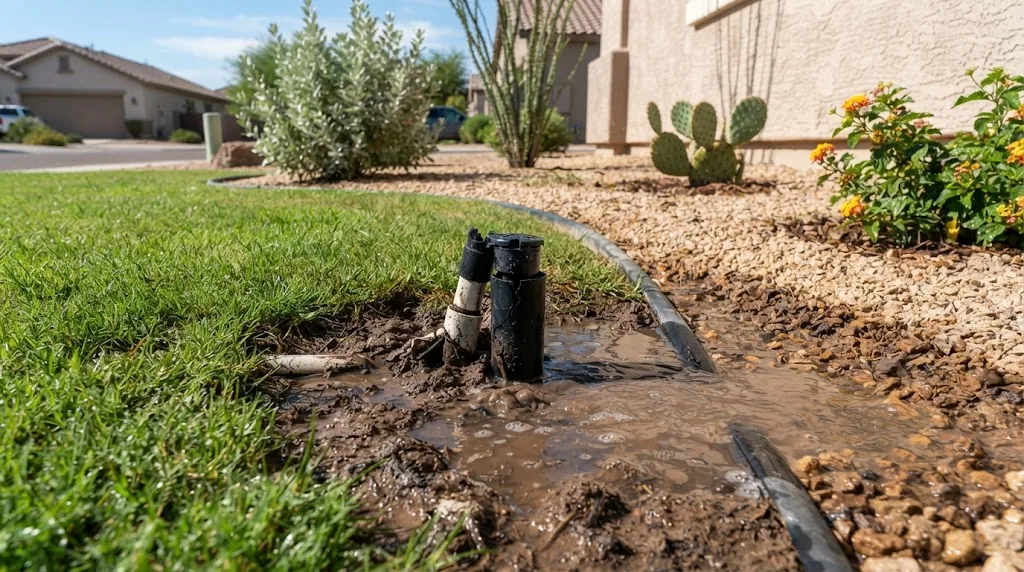
What bubbling at one head usually means
When water comes from the soil around a pop-up head, the leak is usually close to that head. The plastic body may be cracked, the riser below grade may be broken, or a threaded fitting may have loosened where the lateral line feeds the head.
If nearby heads spray weakly at the same time, the broken head may be dumping enough water to lower pressure across the zone. If only that one spot is wet, the repair may be more contained.
- Head clue: water leaks from the cap or body while the head rises.
- Riser clue: water bubbles from the soil and the head leans or sinks.
- Fitting clue: gravel or turf stays wet after the cycle ends.
- Pressure clue: several heads farther down the same zone look weak.
Gilbert yard conditions that make it show up fast
Small turf strips beside gravel, pavers, curbs, and desert beds can make a leaking head obvious quickly. Water may run under rock before it appears, or it may soften the turf around the head after just one cycle.
Heat, hard water, mower hits, shallow risers, and landscape work can all stress plastic parts. If the head sits near a gravel edge, driveway, paver border, or recent planting area, mention that when you call.
- Water Use It Wisely outdoor watering guide — Arizona watering context for separating scheduling stress from leak symptoms.
How to sort adjustment from repair
A head that sprays gravel or misses turf may need adjustment. A head that bubbles at the base is different because water is escaping before the nozzle can do its job. Cleaning the nozzle may help a weak fan pattern, but it will not fix a cracked riser below the head.
Run the zone briefly, watch the bubbling head, and shut it back down if water is pooling. Note whether the head rises straight, whether the cap leaks, and whether the rest of the zone loses pressure.
- Gilbert sprinkler head repair — Use this for cracked heads, risers, clogged nozzles, and spray-pattern problems.
- Gilbert irrigation leak repair — Use this when wet gravel, hidden tubing, or pressure loss may be involved.
What to mention when you call
Say which zone has the bubbling head, whether other heads in that zone look weak, and whether the head sits in turf, gravel, a side yard, or near hardscape. Mention recent mowing, digging, planting, paver work, or timer changes too.
Those details help focus the first check on the head body, riser, fitting, lateral line, or pressure problem instead of a vague system complaint.
Questions to ask when you call
- Does bubbling at one head sound like a cracked riser or fitting leak?
- Should I shut off the affected zone until it is checked?
- Could one broken head make the rest of the zone look weak?
- What details help separate head repair from leak tracing under gravel?
Related repair guides and manufacturer help
- Sprinkler head repair guide — For broken heads, cracked risers, clogged nozzles, and spray adjustment.
- Irrigation leak repair guide — For wet gravel, hidden line breaks, drip tubing, and pressure loss.
- Gilbert drip irrigation cost factors — Useful when bubbling or wet gravel may involve access and diagnosis.
- Gilbert irrigation troubleshooting checklist — Use this to organize head, leak, valve, controller, and drip clues.
- Gilbert sprinkler repair cost guide — Compare common head, leak, valve, and diagnosis ranges.
Need help with sprinkler repair in Gilbert?
Call 480-658-2416 and describe the symptom, where it appears, and what changed before it started.
Call 480-658-2416