Gilbert Irrigation Troubleshooting Checklist Before You Call
Gilbert irrigation problems can show up fast when heat, gravel, hard water, and small turf sections are involved. A dry strip of grass, clogged drip emitter, wet gravel patch, or stuck valve each points to a different first check.
Use this checklist to organize what you see before calling. Clear details help separate a simple adjustment from a head, drip, valve, wiring, controller, or hidden line repair.
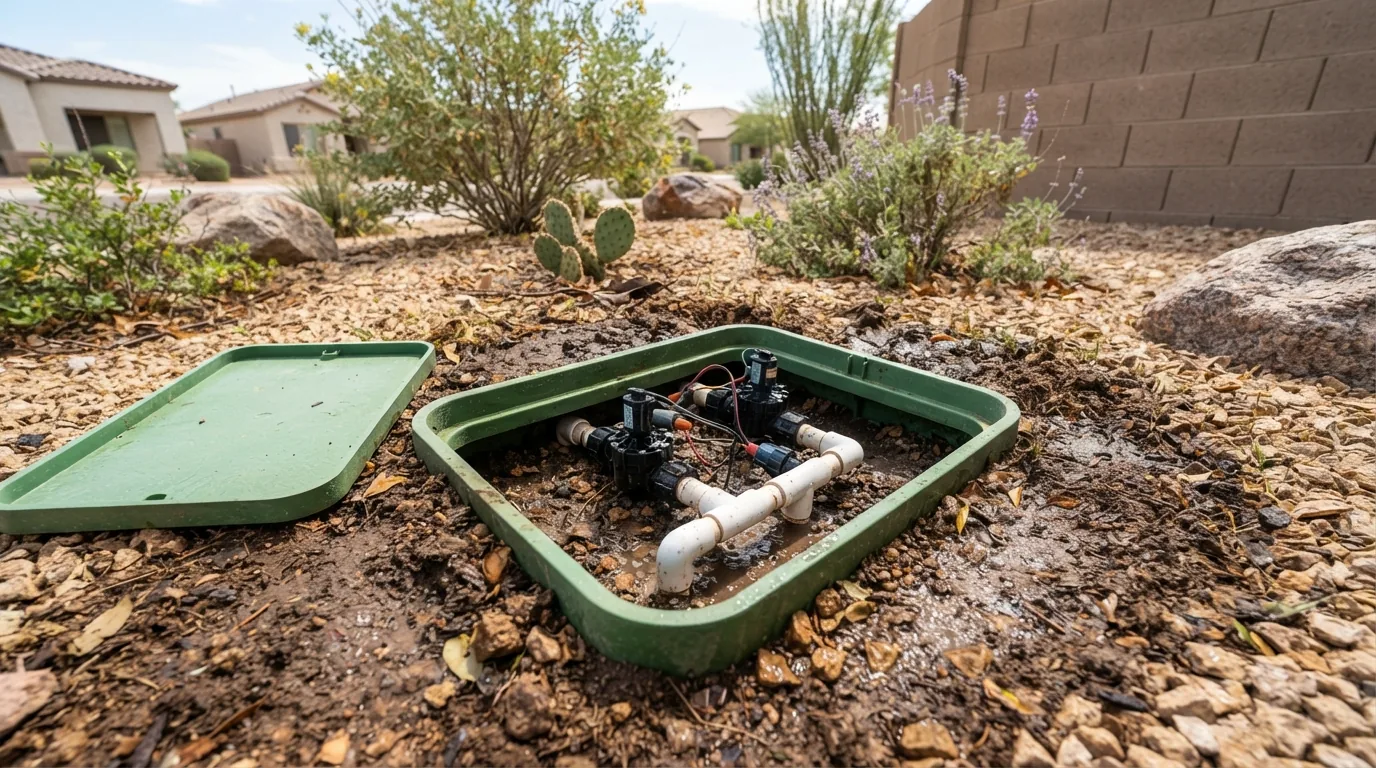
Identify the system part that looks wrong
Gilbert yards often combine spray heads for turf with drip tubing for shrubs and trees. Before guessing at the repair, identify whether the symptom is in a spray zone, drip run, valve box, controller, or wet gravel area.
If turf is dry but shrubs look fine, the issue may stay within one spray station. If several plants on the same drip run are stressed, the problem may involve an emitter clog, tubing break, filter, valve, or pressure issue.
- Dry turf strip beside gravel or pavers
- Drip emitter with little or no flow
- Wet gravel that returns after watering
- Valve box with water, loose wiring, or a stuck zone
- Controller station that skips or runs at the wrong time
- AMWUA desert-adapted plant guide — Regional Arizona landscape context that helps separate plant stress from irrigation repair symptoms.
- Water Use It Wisely outdoor watering guide — Arizona watering context for comparing schedule stress with leaks, pressure problems, and coverage gaps.
Watch the first minute of the zone
The first minute shows whether water reaches the zone normally. Heads that never rise fully can point to pressure loss, while one head bubbling at the base often points to a local head, riser, or fitting problem.
For drip systems, check whether water starts near the manifold but fades farther down the run. Long drip lines, mineral buildup, and hidden tubing under rock can make the end of a run look dry even when the controller is working.
Check watering guidance before assuming a broken zone
Controller schedules and seasonal adjustments can make a healthy irrigation system look inconsistent if the controller is set for a shorter run, skipped day, or drip-only cycle. Before assuming a broken valve or hidden leak, compare the symptom with the current timer program and regional desert watering guidance.
If the schedule looks normal but one station stays dry, wet gravel returns after the cycle, or the valve box refills, treat that as a repair clue instead of a watering-calendar question. Mention whether the issue happened after a program change, heat wave, landscape work, or a recent controller reset.
- Schedule clue: all zones run shorter than expected after a seasonal timer change
- Repair clue: one zone has weak pressure while nearby zones run normally
- Leak clue: wet gravel or a full valve box returns after watering stops
- Drip clue: shrubs on one line stay dry while turf spray still works
- Water Use It Wisely outdoor water-saving resources — Arizona outdoor watering context for separating schedule questions from repair symptoms.
- AMWUA landscape watering guide — Regional Arizona watering context for comparing heat stress, plant needs, and irrigation coverage clues.
Separate adjustment from repair
Adjustment clues include a spray head aimed at gravel, a clogged nozzle, or a drip emitter that can be cleaned or replaced at an exposed spot. These are usually more contained than a valve, wiring, or buried leak problem.
Repair clues include water traveling under gravel, pressure loss across a full zone, a valve that will not open or close, cracked tubing, broken fittings, or controller behavior that does not match the programmed schedule.
Details worth mentioning on the phone
Mention the affected station, whether the issue is turf or drip, where water appears, and whether recent planting, digging, paver work, timer changes, or extreme heat made the symptom worse.
If water is actively leaking near hardscape or a valve box, ask whether shutting off the affected zone or irrigation supply is the right temporary step.
Questions to ask when you call
- Does this sound like a sprinkler head, drip emitter, valve, controller, or hidden line issue?
- Should I shut off one zone or the full irrigation supply for now?
- What details help narrow the diagnosis before a visit?
- Could hard water, gravel, heat, or recent landscaping be involved?
- What cost factors usually change this kind of irrigation repair?
Need help with sprinkler repair in Gilbert?
Call 480-658-2416 and describe the symptom, where it appears, and what changed before it started.
Call 480-658-2416