Why Gilbert Sprinkler Zones Run Dry in Summer
A Gilbert sprinkler zone can look fine in spring and then start falling behind once the weather turns hot. Turf edges dry out, a drip line stops feeding shrubs evenly, water lands on gravel instead of grass, or one zone runs with much weaker coverage than the others.
Summer heat is often the moment when a small irrigation issue becomes obvious. That does not always mean the whole system is failing. It usually means one part of the zone, one setting, or one buried line needs attention before the dry area gets worse.
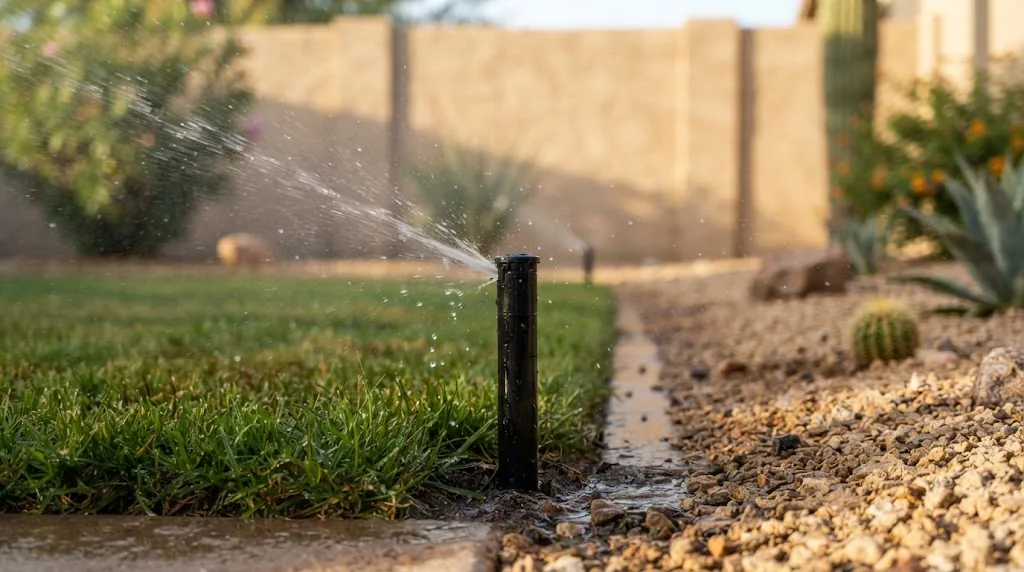
Why summer heat exposes sprinkler problems
Gilbert yards deal with extreme heat, hard water, gravel borders, and a lot of drip irrigation. Those conditions can make a weak head or emitter show up quickly because plants lose water faster than the system is replacing it. A small nozzle clog can leave one strip of turf dry in just a few hot days.
Heat also changes how leaks behave. A slow drip under rock may not be obvious right away, but it can still lower pressure and reduce coverage in the rest of the zone. When that happens, the visible symptom may look like a coverage problem even though the real issue is a leak or valve failure.
- Dry turf strips can point to a weak head, clog, or misaligned spray pattern.
- Drip systems can fail quietly under gravel before the plants show stress.
- Hard water can leave buildup in emitters, nozzles, filters, and valve parts.
- A single leak can reduce pressure enough to affect nearby heads or drip runs.
- AMWUA landscape watering guidance — Regional desert-watering context for hot-weather irrigation symptoms around the Phoenix metro.
- Water Use It Wisely outdoor watering guide — Arizona watering guidance that helps separate scheduling stress from repair clues.
How to tell a dry spot from a system problem
A dry spot is not always a sprinkler repair, but it often starts with one. If the head rises normally and simply sprays the wrong direction, the fix may be an adjustment. If the head rises weakly, sputters, or leaves the rest of the zone under-covered, the issue is more likely a clogged nozzle, pressure loss, or damaged part.
The same idea applies to drip lines. A plant bed that dries out may need a new emitter or a cleared fitting, while a wet patch under gravel may point to a hidden leak or loose connection. The symptom tells you which part of the system deserves the first check.
- Adjustment clue: the spray reaches the wrong area but pressure still looks normal.
- Clog clue: the head or emitter is on, but the pattern is weak, misty, or uneven.
- Leak clue: water is pooling under gravel, around the valve box, or near hardscape.
- Valve clue: the zone starts late, skips, or keeps running after the controller stops.
What to check before you call
The fastest repair conversation starts with specific observations. Note the zone number, whether the problem is turf or drip, whether water is visible anywhere, and whether the issue started after landscaping, digging, or a timer change. If you have photos of the dry strip, the head, or the valve box, those can help explain the problem quickly.
In Gilbert, it also helps to mention whether the line runs beside gravel, pavers, curb edges, or shrub beds. Access changes the repair path because a visible head in open turf is very different from tubing buried under rock or a fitting tucked into a tight corner.
- Which zone or drip run is acting up
- Whether water is missing, pooling, or spraying the wrong surface
- Whether the controller, valve box, or one part of the yard seems involved
- Any recent planting, trenching, edging, or irrigation timer changes
When repair is more likely than adjustment
A repair becomes more likely when the zone keeps losing pressure, a head stays broken, an emitter line is leaking, or the same area dries out every cycle even after the timer and spray pattern are checked. Those situations usually need a part replacement, a leak fix, or valve work instead of a quick tweak.
If the problem keeps returning, it is worth treating the zone as a diagnosis problem instead of guessing. That keeps the conversation focused on the actual symptom and helps avoid replacing the wrong part.
Questions to ask when you call
- Does this sound like a head, drip, valve, or pressure problem?
- Is this likely an adjustment or a repair?
- What details would help explain the problem before a visit?
- Should I shut off the affected zone until someone can look at it?
- Could heat, hard water, gravel, or recent yard work be part of the issue?
Related repair guides and manufacturer help
- Why a Gilbert sprinkler valve box fills with water — Use this when a dry summer zone also has water collecting around a valve box or manifold.
- Gilbert sprinkler heads sinking below turf and gravel edges — Use this when dry edges or weak spray may come from low pop-up heads rather than the controller schedule.
- Gilbert sprinkler zone repair — For stuck valves, weak zones, controller response, solenoids, and wiring clues.
- Gilbert sprinkler repair cost guide — Compare common cost factors for heads, valves, drip leaks, and diagnosis.
Need help with sprinkler repair in Gilbert?
Call 480-658-2416 and describe the symptom, where it appears, and what changed before it started.
Call 480-658-2416