Why Gilbert Drip Emitters Clog and Stop Flowing
When a Gilbert drip emitter clogs, the symptom is often one dry shrub, a row of stressed plants, or a planter that looks thirsty even though the controller ran on schedule. Hard water, fine gravel dust, small filters, sun-baked tubing, and pressure changes can all reduce flow before the problem is obvious.
Start by checking the pattern: one dry plant usually points to a local emitter or short tubing branch, while many weak emitters can point upstream to a filter, pressure regulator, valve, or hidden leak. That distinction helps you explain the issue clearly before calling about irrigation repair.
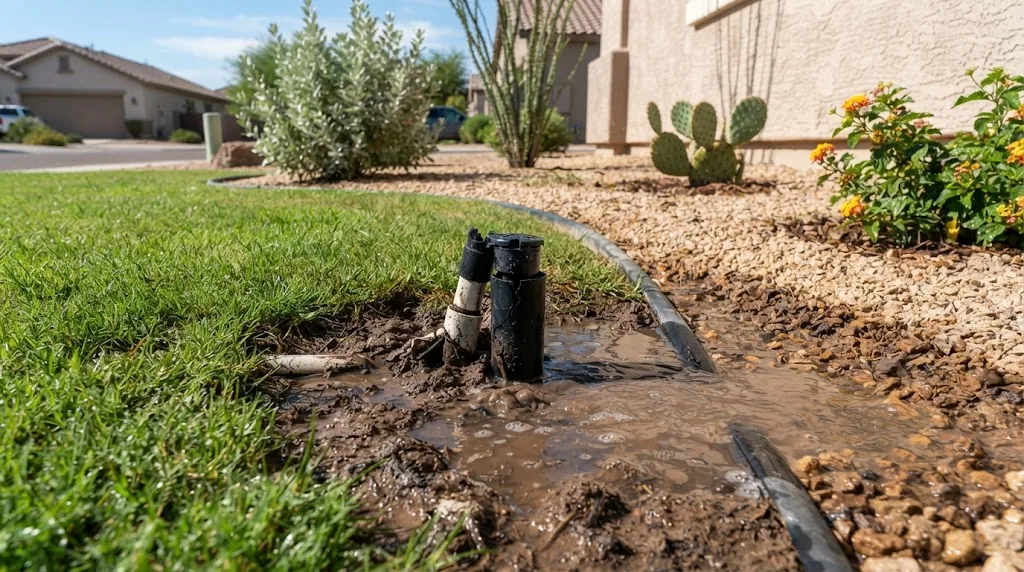
Why Gilbert drip emitters clog in East Valley yards
Small drip emitters have narrow openings, so mineral scale and debris matter. Gilbert hard water can leave white calcium deposits inside emitters, filters, and fittings. Gravel dust, plant debris, and older tubing can add enough blockage that one plant receives less water than the rest of the run.
Heat also ages plastic parts. Tubing that has become stiff may crack near a barb fitting, while an emitter that looks attached may no longer deliver steady flow. A dry plant is not always just a watering schedule problem, especially when nearby plants on the same timer behave differently.
- White mineral buildup around emitters or small fittings
- One plant drying while nearby plants on the same run look normal
- Emitter flow that drips weakly instead of pulsing or flowing steadily
- Old tubing that feels brittle or separates near bends and tees
Quick checks before you assume the emitter is the only problem
Run the drip zone long enough to see whether water reaches the beginning, middle, and end of the line. If the first emitters flow but the last ones barely drip, the issue may be pressure, line length, a restriction, or a partially closed valve rather than one bad emitter.
Look for wet gravel, loose tubing, disconnected barbs, or a valve box that refills after watering. Those signs can mean water is escaping before it reaches the dry plant, so replacing only the visible emitter may not solve the real repair.
- One dry plant: likely local emitter, barb, or short branch issue.
- Several dry plants in a row: possible filter, pressure, regulator, valve, or tubing restriction.
- Wet gravel near dry plants: possible hidden tubing leak or disconnected fitting.
- Weak flow across the whole zone: check valve, controller, pressure, and upstream filter clues.
How to tell a clog from a leak, pressure, or valve issue
A clog usually affects one emitter, one plant, or a short branch. A leak often leaves wet gravel, soft soil, or unexpected plant growth in the wrong place. A valve or pressure issue can make many emitters weak at the same time or cause a whole drip zone to fail.
Before assuming every emitter needs replacement, check the pattern. One dry shrub points to a local emitter or tubing issue. A whole row of dry plants points higher upstream toward a filter, pressure regulator, valve, or controller setting.
- Clog clue: one emitter barely flows while the rest of the run works.
- Leak clue: water appears under gravel away from the dry plant.
- Pressure clue: many emitters on the same run are weak together.
- Valve clue: the full drip zone skips, starts late, or will not shut off.
Repair-vs-adjust questions to ask
Sometimes the fix is small: cleaning or replacing one emitter, reconnecting a loose fitting, or moving an emitter closer to the plant root zone. Other times the visible dry plant is the symptom of a buried leak, clogged filter, failing pressure regulator, or valve issue.
A useful repair conversation should start with the affected plants, the run time, and whether water is visible under the gravel. That keeps the next step focused on diagnosis instead of randomly adding more emitters to a line that may already have a pressure problem.
- Adjustment: emitter is flowing but sits too far from the plant.
- Simple repair: one clogged or damaged emitter needs replacement.
- Line repair: tubing is cracked, pulled apart, or leaking under gravel.
- Diagnosis: several plants or the whole zone has weak flow.
What to mention before scheduling
Note whether the issue is one plant, a row of plants, or the whole drip zone. Mention whether the ground is wet anywhere, whether the line runs under gravel or pavers, and whether the problem started after planting, digging, trimming, or a controller change.
If water is actively pooling, shut off the affected zone if you can do so safely. Photos of the dry plant, emitter, valve box, and wet gravel can make the first call much more useful.
Questions to ask when you call
- Does this sound like one clogged emitter, a tubing leak, or a full-zone pressure problem?
- If several plants are dry, should the filter, valve, or pressure regulator be checked first?
- What details help separate a watering-schedule issue from an irrigation repair?
- Should I turn off the affected zone if water is appearing under gravel?
- Could Gilbert hard water or heat be causing repeated drip emitter clogging?
Related repair guides and manufacturer help
- Irrigation leak repair signs in Gilbert — Use this when wet gravel, low pressure, or cracked tubing may be part of the drip problem.
- Sprinkler zone and valve repair clues — Useful when several emitters are weak or a full zone starts, skips, or will not shut off.
- Gilbert drip irrigation and sprinkler repair cost factors — Compare simple emitter fixes with valve, pressure, tubing, and hidden leak diagnosis.
Need help with sprinkler repair in Gilbert?
Call 480-658-2416 and describe the symptom, where it appears, and what changed before it started.
Call 480-658-2416